
Table of Contents
Imagine you’re sitting in a small cafe in France, trying to order a cup of coffee. The person behind the counter speaks French, and you know only a few basic words. Now imagine being able to speak with them confidently, ask about local food, and even make a new friend. Suddenly, your trip becomes more than just sightseeing. You’re experiencing a new culture, one conversation at a time.
That’s the beauty of learning a second language. It’s not just about memorizing words, grammar rules, or passing an exam. Learning a second language opens doors to new experiences, connects you with people, and lets you see the world from a different perspective. As the saying goes, “Knowledge is power,” and knowing another language can give you an advantage in both your personal and professional life.
But don’t just take my word for it. A 2019 report by the British Academy found that almost nine in ten adults surveyed believed learning a second language or other language could improve employment opportunities. A similar proportion associated language learning with stronger analytical skills. Research reviews have also explored its potential benefits for cognitive abilities, creativity, academic achievement, and communication across cultures.
So, why does this matter to college students?
Many colleges require students to take at least one foreign-language course as part of their degree. However, some students treat these classes as just another box to tick. They learn enough to pass the exam; after that, they will never try to learn or explore more.
But here’s the catch: the real benefits often begin when you go beyond the classroom.
Whether you want to build a stronger résumé, travel with confidence, understand different cultures, or simply challenge yourself to learn something new, a second language can be a valuable skill to have.
In this article, we’ll explore eight practical benefits of learning a second language in college and why the effort you put in today could open up exciting opportunities in the future. Let’s get started.
10 Practical Benefits of Learning a Second Language in College
Learning a second language can do much more than help you pass an exam. It can help you communicate with new people, explore different cultures, and prepare for opportunities that might otherwise be difficult to access. Let’s look at 10 practical benefits and how they can make a difference in your college life and future career.
1. Better Career and Job Opportunities with Learning a Second Language
Imagine two candidates applying for a job at an international company. Both have similar qualifications, but one can also communicate with clients in another language. Depending on the role, that extra skill could help the second candidate stand out.
Learning another language can be useful in industries such as tourism, hospitality, international business, customer support, translation, and education. Some employers need people who can communicate with customers or colleagues from different countries.
Practical tip: Choose a language that matches your career goals. For example, Spanish may be useful in some international business roles, while Japanese or German could be relevant to particular companies and industries.
2. It Improves Your Attention Span
You don’t need years of practice to notice a difference. Just one week of learning a new language improved students’ alertness and focus. And the benefit stuck around for those who kept studying for at least five hours a week.
You might think this only works for young students, but it doesn’t. This study included people from 18 to 78 years old, and every age group showed a better attention span.
So whether you’re 18 or 78, picking up a new language can help you concentrate better.
3. Better academic performance
Researchers looked at 20 different studies on language learning and school performance. In 90% of them, students who were learning a second language did better across a range of subjects than students who weren’t.
Why does this happen? Learning a language builds your reading and writing skills (your literacy). Strong literacy helps you in almost every subject, including maths and science, because you can understand questions and explanations better.
That will improve your academic performance
4. More Confidence While Traveling
Travel becomes much easier when you can understand basic phrases in the local language. Instead of depending entirely on translation apps, you may be able to ask for directions, order food, read signs, and explain what you need.
For example, if you visit Japan and know a few Japanese phrases, you can greet local people, ask about train stations, and order a meal more comfortably.
You don’t have to speak perfectly. Even a few useful sentences can make everyday situations less stressful.
Practical tip: Before traveling, learn greetings, numbers, directions, food-related phrases, and how to ask for help.

5. A Better Understanding of Other Cultures
Language and culture go hand in hand. The way people greet each other, express respect, tell jokes, or celebrate festivals often reflects their cultural background.
When you learn another language, you begin to understand not only what people say but also the meaning behind their words. This can help you avoid misunderstandings and appreciate different ways of life.
For example, learning a language may help you understand why certain greetings or forms of address are important in a particular culture.
Practical tip: Watch films, listen to music, or read short stories in the language you’re learning. These activities can make cultural learning more enjoyable.
You May Like – If you want your email to be replied to, then you must know these 7 Steps to Write an Effective Email (Learnatcollege)

6. Improved Communication Skills
“Have you ever struggled to explain an idea clearly? Learning a second language can encourage you to think carefully about words, sentence structure, and how you express yourself.”
As you practise speaking and listening, you learn to pay attention to tone, context, and the meaning behind a message. These habits can also help you become a more thoughtful communicator in your first language.
For instance, a college student practising
in English may gradually become more comfortable asking questions, participating in discussions, and giving presentations.
Practical tip: Find a language partner and spend 10–15 minutes a day having simple conversations. Consistent practice is more useful than waiting until you feel completely ready.

7. New Friendships and Stronger Connections
One of the most enjoyable benefits of learning another language is the opportunity to connect with people you might never have spoken to otherwise.
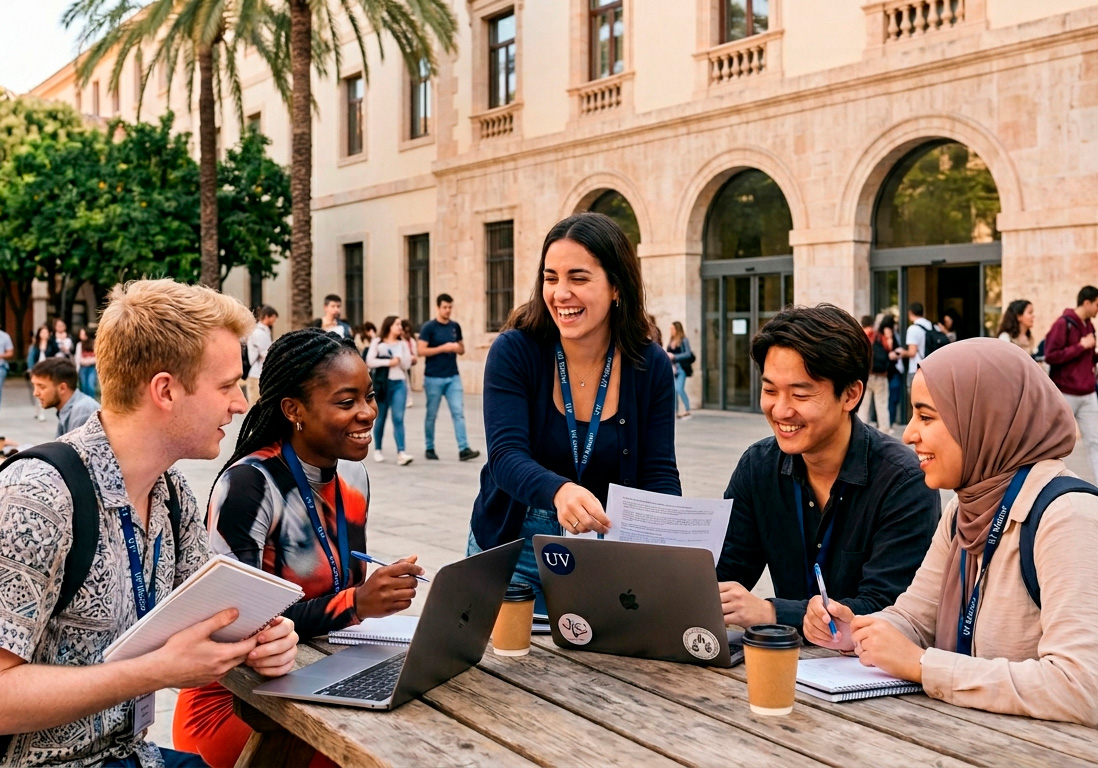
Imagine joining an international student group at college. Knowing another student’s language—even at a basic level—can give you an easy way to start a conversation and show interest in their background.
These connections may develop into friendships, study partnerships, or professional relationships that last beyond college.
Practical tip: Join language clubs, cultural events, online conversation groups, or international student activities to practise what you learn.

8. New Opportunities to Study Abroad
If you dream of studying in another country, learning its language can help you prepare for the experience. Some universities and programmes require a particular level of language proficiency, while others offer courses in English but still value local-language skills.
Knowing the local language may help you understand campus announcements, communicate with people outside the classroom, and manage daily activities more independently.
For example, a student planning to study in Germany might learn basic German before arriving, even if their degree programme is taught in English.
Practical tip: Check the language requirements of your target university early. If a proficiency certificate is required, plan your preparation accordingly.
9. More Career Flexibility in the Future
Your first job may not be your last. Over time, you might want to work with international clients, move into a different industry, travel for business, or apply for opportunities overseas.
Knowing a second language can give you another skill to draw on when your career goals change. It may be particularly valuable when combined with qualifications in fields such as technology, marketing, finance, healthcare, or business.
For example, a software developer who speaks another language may be better equipped for certain roles involving international customers or multilingual product teams. The language itself won’t guarantee a job, but it can complement technical expertise.
Practical tip: Combine language learning with a professional skill. A language certificate, relevant work experience, and strong communication abilities can make a more convincing combination than language knowledge alone.

10. Learning a Second Language Gives You a Sharper Memory
When you learn a new language, you memorize words, learn grammar rules, and then pull it all out of your head at just the right moment, like when you’re ordering food or chatting with someone. That’s a real workout for your brain.
No wonder research shows that people who regularly speak a second language often do better on memory tests than people who speak only one.
Here’s the best part: it doesn’t matter when you learned it. Whether you started as a kid or as an adult, the benefit shows up. It helps both short-term memory (holding a new word in mind while you build a sentence) and long-term memory (remembering vocabulary months later).
There’s even a bigger payoff later in life. A well-known study by Ellen Bialystok found that bilingual people showed signs of dementia about four to five years later than those who spoke one language.
So even 15 minutes a day can help. Start small, stay regular, and your memory will thank you.
Some of the studies and real surveys also suggest that there are relevant benefits of learning a Second Language. For example, the first European Commission survey of almost 27,000 people and a research study involving 1,260 people in Delhi, India
Why do people want to learn another language?
European Commission, Special Eurobarometer 540, survey conducted in September–October 2023 and published in 2024. Respondents could identify multiple benefits.
Percentages of surveyed Europeans identifying each benefit. Multiple responses were possible.
What this tells us:
Career opportunities were the most frequently cited benefit, followed by understanding other cultures. This chart fits particularly well with Benefits 1, 2, 3, and 8 in your article.
How common is speaking another language among Europeans?
European Commission, 2024 Eurobarometer survey.
Share of respondents who reported being able to hold a conversation in the specified number of additional languages.
What this tells us:
In the survey, 59% of Europeans said they could hold a conversation in at least one language other than their mother tongue, while 28% could converse in at least two. This is useful context for discussing language learning as a practical communication skill.
Conclusion –
Learning a second language in college is about much more than passing an exam or adding another skill to your resume. It can help you communicate more confidently, understand different cultures, build new friendships, and explore better career opportunities. Whether you want to travel abroad, study in another country, or stand out in the job market, knowing another language can open doors you may not have considered before.
You don’t have to become fluent overnight. Start with a few words each day, watch videos in your chosen language, or practice speaking with friends. Small steps can lead to real progress. After all, every new language gives you another way to connect with the world.
Frequently asked questions
1. Why should college students learn a second language?
College students can improve their communication skills, understand other cultures, prepare for international opportunities, and strengthen their resumes. Learning a language can also make traveling and meeting new people easier.
2. Which second language is best to learn for career opportunities?
It depends on your career goals and interests. Spanish, French, German, Mandarin Chinese, and Japanese may be useful in different industries. In India, improving English communication can also be valuable for many jobs and professional settings.
3. How does learning a second language improve communication skills?
It encourages you to listen carefully, choose words thoughtfully, and express your ideas in different ways. It can also help you become more comfortable communicating with people whose backgrounds and perspectives differ from yours.
4. Can learning a second language help students get a job?
Yes, language skills can be an advantage in fields such as tourism, customer service, education, international business, translation, and global technology companies. However, employment depends on several factors, including your qualifications, experience, and the employer's requirements.
5. How long does it take to learn a second language?
It depends on the language, your current skills, your learning method, and how consistently you practice. You may learn basic greetings and everyday phrases within a few weeks, while comfortable conversation or fluency usually takes much longer.